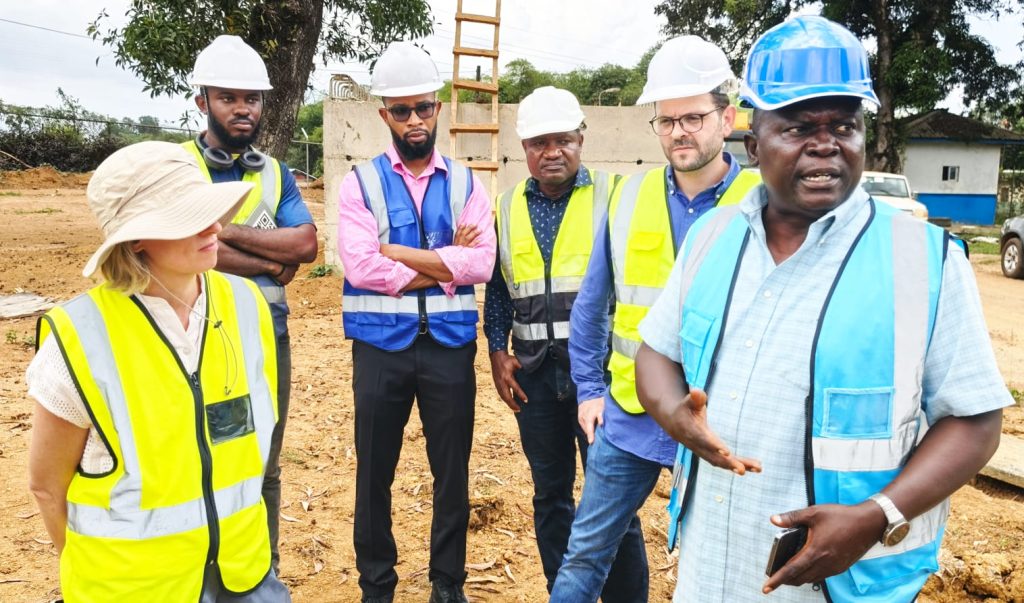
The Liberia Water and Sewer Corporation (LWSC), in collaboration with the World Bank and project contractors, has conducted a comprehensive assessment of the ongoing pipeline construction project aimed at expanding and strengthening Liberia’s water infrastructure system. The exercise brought together the LWSC Deputy Managing Director for Technical Services (DMD-TS), members of the Project Implementation Unit (PIU), contractors responsible for the installation of the 48-inch transmission line, and a visiting delegation from the World Bank. The team toured the Water Treatment Plant (WTP) and other project sites to evaluate the quality, progress, and technical standards of work being carried out under the project.
A major highlight of the assessment was the pressure testing of the newly installed water transmission pipeline expected to replace the aged 36_ inch transmission pipeline. Engineers and technical experts are conducting the pressure test to verify the strength, durability, and reliability of the system before it becomes fully operational. The process is designed to identify leaks, weak joints, or structural defects that could affect the long-term performance of the newly constructed pipeline.
Officials described the successful pressure testing exercise as a positive indication that the pipeline will be capable of withstanding operational water pressure and delivering uninterrupted water supply to residents once commissioned.
The delegation also inspected several valve chambers that serve as key control and distribution points within the water supply network. The inspection also focused on the structural integrity of the chambers, proper valve installation and alignment, maintenance accessibility, and overall operational readiness. According to project engineers, ensuring that the valve chambers meet required engineering and operational standards is critical to the efficient distribution of water across targeted communities.
Another significant aspect of the tour involved the inspection of the installation and laying of the 48-inch ductile pipes, which form part of the backbone of the upgraded transmission system. The World Bank and technical teams assessed the alignment and depth of the pipeline, the quality of welding and pipe connections, compliance with engineering specifications, construction safety measures, and the overall progress of the ongoing works.
The installation of the large-capacity pipes is expected to significantly improve water transmission capacity, reduce water losses, and strengthen the reliability of Liberia’s national water distribution system.
Speaking during the assessment, project stakeholders emphasized the importance of maintaining high-quality standards and ensuring accountability throughout the implementation process. They noted that the project represents a major investment in Liberia’s water infrastructure and demonstrates continued collaboration between LWSC and the World Bank in improving access to safe and reliable water services.
Once completed, the upgraded system is expected to enhance water supply efficiency, expand access to clean drinking water, reduce pipeline leakages and service interruptions, and support urban growth and public health improvement across Liberia.